How to Close $40,000 Boiler Replacement Jobs That Get Stuck in Property Management Approval
Introduction to Boiler Replacement Quote Follow-Up Systems
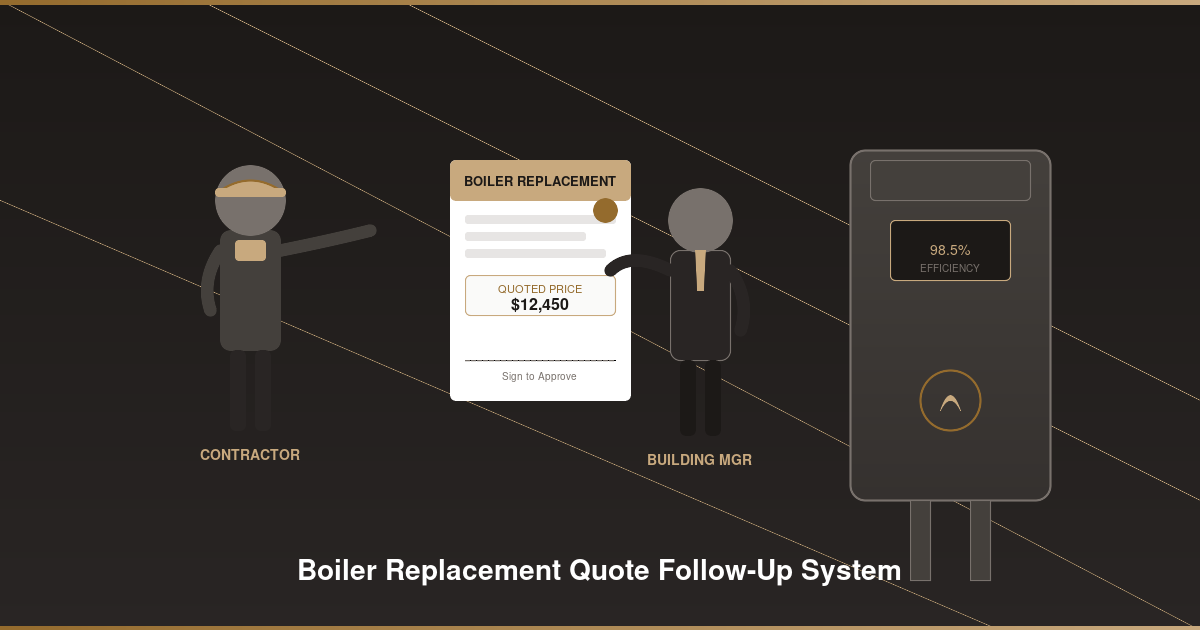
A boiler replacement quote follow up system automates the entire nurturing process using integrated CRM, email, and SMS workflows designed for HVAC and plumbing contractors. When a $40,000 commercial boiler proposal lands on a property manager's desk, it rarely gets approved by one person alone—it passes through committee review, budget discussions, and board meetings that can stretch weeks or months.
Without a structured follow-up system, these high-value quotes die in silence. The contractor assumes the prospect went cold, while the property manager simply got buried in other priorities. Automated follow-up changes that dynamic entirely by sending the right information to the right stakeholder at precisely the right moment in the approval chain.
How Automated Quote Tracking Works
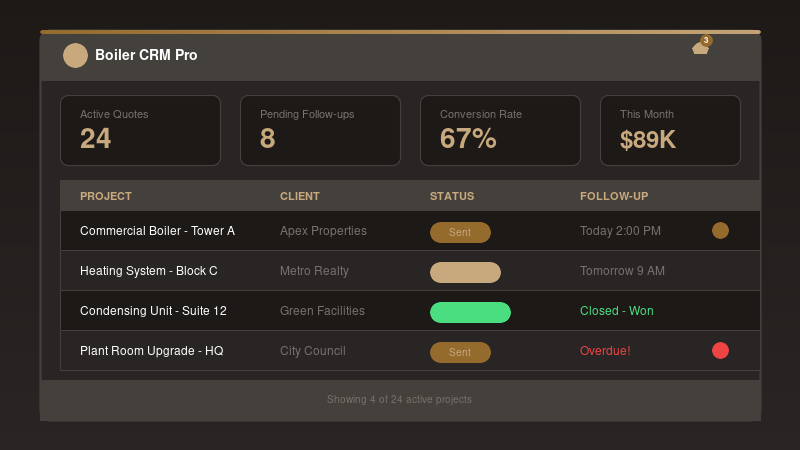
The core function of a boiler replacement quote follow up system is tracking quote status and automating communication at every stage. The system logs whether quotes have been sent, viewed, clicked, or forwarded—giving contractors real-time visibility into prospect engagement without manual check-ins.
Trigger-based follow-ups fire based on prospect activity and predefined timelines. If a property manager opens a quote PDF but does not respond within 48 hours, the system automatically sends a value-add email addressing common objections. If no activity occurs for seven days, a different sequence activates to re-engage the decision-maker.
Automated follow-ups recover forgotten quotes that would otherwise expire without response
Email, SMS, and phone touchpoints keep proposals visible during long property management approvals
Property-specific details and energy savings data build trust and close high-ticket boiler deals
Core Components of a Quote Follow-Up System
Effective boiler replacement quote follow up systems consist of four integrated components working in sequence. Quote generation with line-item templates ensures proposals are professional and consistent, while CRM tracking monitors each quote through a defined pipeline from sent to viewed to accepted.
Automated email and SMS sequences deliver pre-written messages at optimal intervals based on prospect behavior and elapsed time. Analytics dashboards aggregate all activity into a single view, showing which quotes are hot, which are stalling, and which need immediate human intervention to prevent loss.
The Role of Automation in the HVAC Sales Funnel
Automation reduces lead drop-off at the most critical juncture in the HVAC sales funnel—the gap between quote delivery and decision. According to McKinsey research, companies implementing sales automation see 10-15% efficiency improvements and up to 10% sales uplift across their pipeline. For contractors handling dozens of active boiler proposals simultaneously, these gains translate directly to recovered revenue.
Response time is the hidden variable in boiler replacement quote follow up success. Automated systems respond to prospect activity in seconds rather than hours or days, qualifying leads through engagement scoring and routing hot prospects to sales reps for immediate personal outreach. This speed advantage compounds over time as more quotes enter the pipeline.
Commercial boiler replacement quotes require an average of five or more follow-up touches before closing because property management approvals involve multiple decision-makers, budget committees, and board reviews. Automated multi-channel sequences combining email, SMS, and scheduled calls keep proposals visible throughout the entire approval chain, recovering up to 60% of quotes that would otherwise be forgotten and increasing close rates from 10-20% to 40-50%.
Follow-Up Cadence Strategy for Property Management Approvals
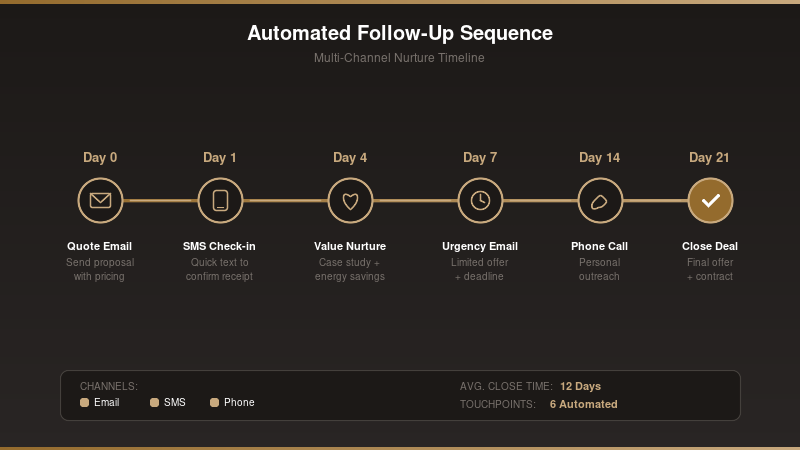
Research from FTL Finance confirms that 80% of sales require five or more follow-up contacts to close. For commercial boiler replacement projects navigating property management approval chains, a structured multi-touch cadence is essential to maintaining momentum without crossing into annoyance.
Professional proposal with line items, timeline, and clear next steps delivered immediately after site visit
Brief text confirming receipt and offering to answer immediate questions about scope or pricing
Share relevant case study or energy efficiency data that supports the business case for approval committees
Highlight seasonal scheduling constraints, equipment lead times, or expiring rebate deadlines
Direct call to decision-maker offering to present to the board or answer technical questions from stakeholders
Offer maintenance package inclusion, payment plan options, or extended warranty to push past final approval hurdle
Personalization Techniques That Close High-Ticket Boiler Deals
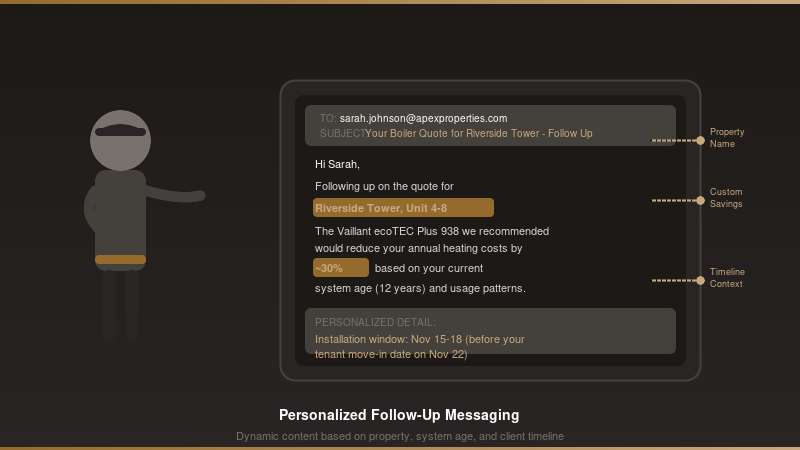
Generic follow-ups get ignored. Effective boiler replacement quote follow up messages reference specific property details—building age, current equipment model, occupancy count, and known efficiency problems documented during the site assessment. This specificity signals expertise and makes the proposal feel tailored rather than templated.
Segmentation by urgency and budget allows contractors to prioritize their highest-value opportunities. Properties facing imminent equipment failure receive aggressive cadences with emergency replacement messaging, while budget-constrained buildings get content focused on financing options, utility rebates, and long-term ROI calculations that support their internal business case.
CRM and Scheduling Integration
A boiler replacement quote follow up system delivers maximum value when it syncs with booking and scheduling platforms. Every interaction—email opens, link clicks, SMS replies, voicemail listens—gets logged in a single CRM record, giving the sales team complete context before every touchpoint. This eliminates the disconnect between office staff and field technicians that kills deals.
Automated reminders trigger internal notifications when quotes hit critical milestones or stall past expected timelines. The system connects with marketing tools to enroll stalled prospects in nurture campaigns, with dispatching software to block installation slots for near-close deals, and with accounting platforms to generate invoices the moment approval lands.
Energy Efficiency Messaging and Upselling Opportunities
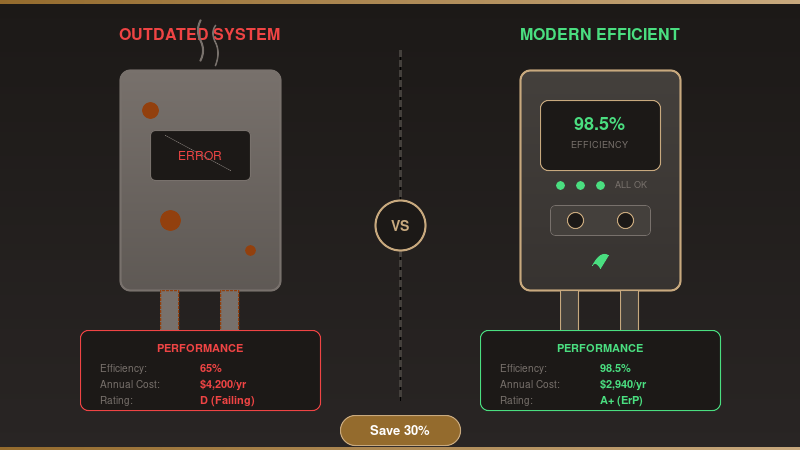
Energy savings messaging transforms a boiler replacement from a grudge purchase into a strategic investment. Follow-up content that quantifies annual fuel cost reductions, calculates payback periods, and highlights available utility rebates gives property managers the ammunition they need to justify the expenditure to ownership groups and budget committees.
Smart upselling within the follow-up sequence recommends complementary upgrades—building automation controls, hydronic balancing, or condensing technology—framed as incremental additions that maximize the ROI of the base replacement project. This approach increases average deal size by 15-25% while actually making the proposal easier to approve by improving the financial projections.
Common Challenges and How to Overcome Them
The most damaging mistake in boiler replacement quote follow up is sending generic messages that fail to reference the specific property or project scope. Prospects immediately recognize template emails and disengage. The fix is mandatory personalization fields that pull from site assessment data, ensuring every touchpoint feels like a continuation of the original conversation.
CRM integration failures create data silos where quote status lives in one system while communication history lives in another. Poorly timed follow-ups—sending urgency messages too early or educational content too late—signal desperation rather than professionalism. Pricing transparency concerns arise when follow-ups reference costs differently than the original proposal, eroding trust at the worst possible moment.
Frequently Asked Questions
How does a follow-up system improve boiler replacement quote conversions?
A boiler replacement quote follow-up system improves conversions by automating multi-channel touchpoints across email, SMS, and phone at optimized intervals throughout the property management approval cycle. Research shows that 80% of sales require five or more contacts, and automated systems ensure no quote falls through the cracks during lengthy committee reviews. Contractors using structured follow-up sequences report close rate improvements from 10-20% to 40-50% on high-ticket commercial boiler projects.
What details should be included in boiler replacement quote follow-ups?
Effective boiler replacement quote follow-ups should include property-specific details such as building age, current equipment model number, occupancy count, and documented efficiency problems from the site assessment. Each message should also reference projected energy cost savings, available utility rebates, equipment lead times, and financing options relevant to that specific project. This level of specificity demonstrates expertise and provides property managers with the data points needed to justify expenditure to approval committees.
Can automation help manage boiler quote follow-ups more efficiently?
Automation dramatically improves boiler quote follow-up efficiency by tracking quote engagement in real-time, triggering behavior-based sequences, and logging all interactions in a centralized CRM without manual data entry. McKinsey research indicates that sales automation delivers 10-15% efficiency improvements and up to 10% sales uplift. For HVAC contractors managing dozens of active proposals simultaneously, automation eliminates the human bottleneck that causes high-value quotes to expire unattended.
How do follow-up systems support upselling related home upgrades?
Follow-up systems support upselling by introducing complementary upgrades—such as building automation controls, hydronic balancing, and condensing technology—at strategic points in the nurture sequence after the prospect has engaged with the base proposal. By framing additions as incremental investments that improve the overall ROI calculation, contractors increase average deal size by 15-25% while making the financial case stronger for property management approval committees.
What role does data play in improving boiler replacement follow-ups?
Data drives every aspect of effective boiler replacement follow-ups through engagement analytics that track email opens, link clicks, PDF views, and SMS responses to determine prospect interest levels and optimal contact timing. CRM pipeline data reveals which follow-up cadences produce the highest conversion rates, enabling continuous optimization of message content, channel selection, and sequence timing. Historical close data also helps contractors identify seasonal patterns and approval cycle lengths specific to different property management company types.
Related
Find your first automation
Use the free Operations Scorecard. Four questions give you one workflow recommendation and the measures that should prove it works.